Luxara / Reserve · Field guide
A leadership offsite
that works
Offsites move the needle, but only when they are designed for it. The evidence, the venue choice, and a structure that survives the trip home.
Offsites work. An eight-year Harvard Business Review study of more than 350,000 working relationships found each offsite generated over $180,000 in revenue from new collaborations within two months, and attendees fielded 24% more collaboration requests afterward.
The mechanism is the reshaping of informal networks - people who had not worked together start sharing ideas. But the same research is clear that the result depends entirely on design. This guide covers why the Bow Valley suits a small leadership team, why a private house beats a hotel, how to build the agenda on the evidence, and a structure that holds after everyone goes home.
Not another conference floor
Why a house beats a hotel
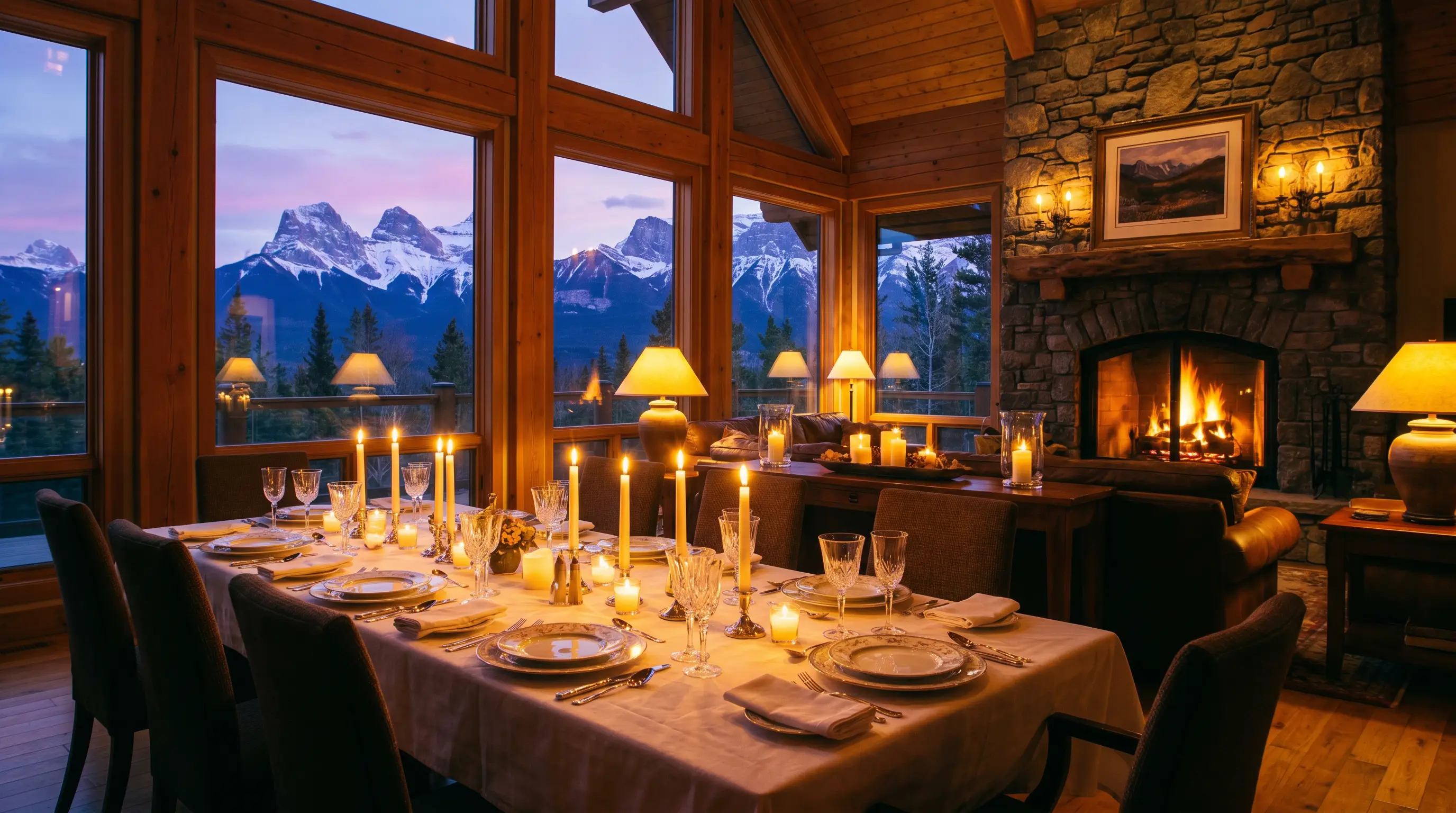
A leadership team needs to talk strategy without competitors in the next conference room. A private house gives privacy a hotel cannot, one space the team owns, and the flexibility to run the days exactly as you want, with no venue minimums.
It is also where the real work happens. Shared meals activate trust and bonding, and the informal face time around a kitchen table is the network-building the research measures. At twelve or more the math favours the house too, with no separate meeting-room, catering or resort fees. Serenity Point sleeps fourteen, with a great room for plenary work and a Nordic circuit for the reset.
Design it on evidence
How to build the agenda
The most common failure is an overloaded agenda. The research points the other way: narrow scope, real breaks, and decisions with owners.
- Give each day one job. Restrict the agenda to a manageable number of key initiatives, typically four to ten. Strategy is as much about what you will not do.
- Work in 60 to 90-minute focus blocks with genuine breaks. The brain cycles roughly every 90 to 120 minutes; the well-known DeskTime analysis found top performers worked in focused stretches and then truly stepped away. Keep laptops closed in session.
- End with ownership. Build decision points into the structure, then close with a written summary, assigned sponsors, and a monthly red-yellow-green review. The classic mistake is leaving energised, with no owners or deadlines.
- Prefer several sessions over time. An initial two-day meeting plus a one-day follow-up a month later beats one marathon.
- Protect the unstructured time. Informal conversation is a deliberate design element, not a gap to fill. It is where the network actually forms.
The bonding that justifies the whole trip happens in the informal hours, around one kitchen and one fire.
Recovery, on purpose
The thermal reset
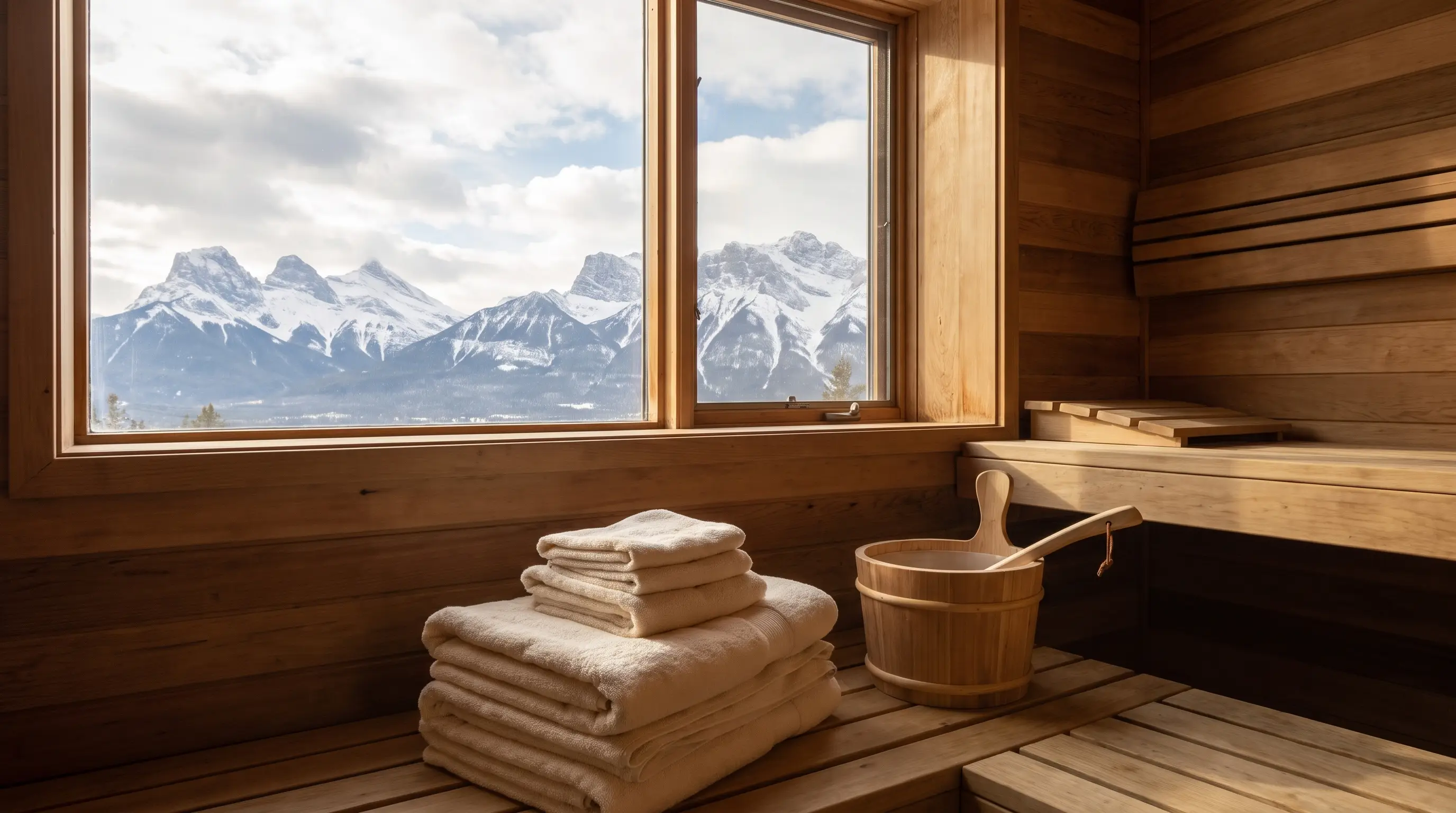
Build the offsite around recovery, not back-to-back sessions. A hot-and-cold circuit is the natural break: a short cold plunge can lift dopamine and sharpen mood for hours, regular sauna use carries real cardiovascular benefit, and the protocol is to end on cold.
The Kananaskis Nordic Spa, forty minutes away, has five pools, saunas and steam. Or stay in: Serenity Point's own Nordic circuit, a cedar sauna and cold plunge with a hot tub, makes the reset a private part of the day rather than an outing.
Two and a half days
A sample structure
Arrive
Arrive mid-week to dodge the weekend highway. Easy walk to the Three Sisters viewpoint, then a first dinner cooked and served in the house. No agenda.
Diverge, decide
Two laptops-closed focus blocks in the great room, each with a stated objective, a real break between. A third block narrows to decisions with named owners. Late-afternoon thermal reset.
Converge, commit
A shared hike first - the informal time is the work. Then a final block to confirm decisions, write the summary, assign sponsors, and set the monthly review cadence.
Depart
An optional short morning walk, then depart by midday to beat the weekend congestion back to Calgary.
One outcome per day, focus blocks with real breaks, decisions with owners, and deliberate informal time. The shape, not the volume, is what makes it stick.
Team time
Real things to do together
- Grassi Lakes · Easy, 3.4 km. A short hike to turquoise lakes between Mount Rundle and Ha Ling. The inclusive opener for the whole team.
- Ha Ling Peak · For the fit. A non-technical but real climb with a big payoff over Canmore, for a group that wants a challenge.
- Canmore Nordic Centre · 15 min. The 1988 Olympic legacy: biking, trail running and guided experiences in summer, groomed ski trails in winter. Hosts private corporate sessions.
- Kananaskis Nordic Spa · 40 min. Five outdoor pools, hot to cold plunge, saunas and steam. The off-site recovery ritual, 40 minutes away.
- Banff Gondola + Sky Bistro · 40 min. A summit dinner at Sky Bistro over six mountain ranges - the closing-night group dinner.
The Bow Valley, the team's backdrop for two days
Logistics
The practical layer
- Getting there. About 1 hr 15 from Calgary International by private transfer or rental. Schedule arrivals and departures mid-week; the highway congests on summer weekends.
- Connectivity. Canmore is on fibre with symmetrical upload and download, built for video calls and a working session. Confirm the property's address-level service.
- The room. Use the great room for plenary, the kitchen table for the informal work, and keep laptops closed in session.
- Catering. A private chef in the house runs about $199 a head; corporate caterers and the Nordic Centre cafe can cover on-activity meals.
- Season. Late September to October and April to early June are the shoulder windows: fewer crowds, clear days, better value, and a short golden larch season in late September.
The base
Serenity Point, for your team
Sleeps fourteen, a great room for the plenary, a long table for the meals that do the bonding, and a private Nordic spa for the reset. One hour from the Calgary airport, on the Silvertip course in Canmore.
Request a stay